
Is IPTV Legal? Complete Guide 2026
The legality of IPTV is one of the most common questions among cord-cutters. This comprehensive guide explains IPTV legality, the difference between legal and illegal services, potential risks, and how to ensure you're using IPTV legally and safely.
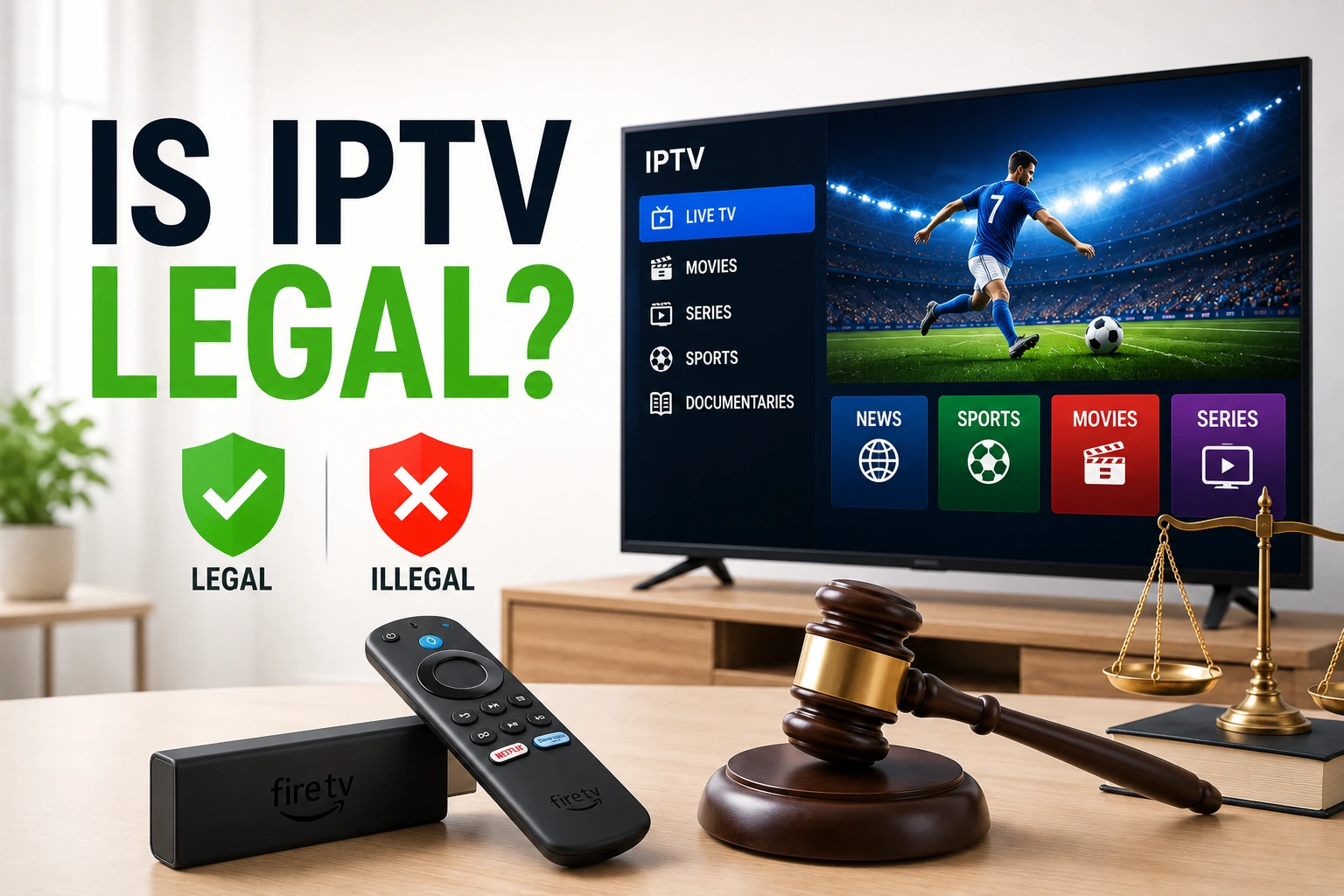
gavel Quick Answer
IPTV technology itself is 100% legal. What determines legality is the content being streamed and whether the service has proper licensing. Using IPTV with legitimate, licensed providers is completely legal. Streaming copyrighted content without permission is illegal, regardless of the technology used.
✓ Legal IPTV
- • Licensed streaming services
- • Properly authorized content
- • Transparent business practices
- • Official payment methods
✗ Illegal IPTV
- • Pirated content streams
- • No content licensing
- • Suspiciously cheap prices
- • Anonymous operations
Understanding IPTV Legality
The Technology is Legal
IPTV (Internet Protocol Television) is simply a method of delivering television content over the internet instead of traditional cable or satellite. The technology itself is completely legal and is used by major companies worldwide.
Examples of Legal IPTV Technology: Netflix, Hulu, YouTube TV, Amazon Prime Video, Disney+, and thousands of other streaming services all use IPTV technology legally.
Content Licensing Determines Legality
What makes IPTV legal or illegal is whether the service has proper licensing agreements to distribute the content. Streaming copyrighted content without permission from rights holders is illegal.
Legal Services Have:
- • Broadcasting licenses
- • Content distribution rights
- • Agreements with content owners
- • Legal business registration
Illegal Services Lack:
- • Any licensing agreements
- • Permission from rights holders
- • Legal authorization
- • Transparent operations
Legal vs Illegal IPTV Services
| Characteristic | Legal IPTV | Illegal IPTV |
|---|---|---|
| Licensing | ✓ Properly licensed | ✗ No licenses |
| Pricing | $20-70/month | $5-20/month (suspiciously cheap) |
| Business Info | Transparent, registered | Anonymous, hidden |
| Payment | Credit cards, official methods | Cryptocurrency, anonymous |
| Content | Licensed channels only | Pirated premium channels |
| Support | Official customer service | Limited or no support |
| Reliability | Stable, guaranteed uptime | Frequent outages, shutdowns |
| Legal Risk | None | Potential legal consequences |
Red Flag: If a service offers "all premium channels" including HBO, ESPN, Sky Sports, etc. for $10-15/month, it's almost certainly illegal. Legal services pay licensing fees that make such pricing impossible.
Examples of Legal IPTV Services
Major Legal Services
- • YouTube TV ($72.99/month)
- • Hulu + Live TV ($76.99/month)
- • Sling TV ($40-55/month)
- • FuboTV ($74.99/month)
- • DirecTV Stream ($69.99/month)
- • Philo ($25/month)
Network-Specific Services
- • ESPN+ (sports)
- • Peacock (NBC content)
- • Paramount+ (CBS content)
- • Discovery+ (Discovery networks)
- • HBO Max (HBO content)
- • Apple TV+ (Apple originals)
Why These Are Legal
These services have negotiated licensing agreements with content owners, pay royalties, operate transparently with registered businesses, and charge prices that reflect the actual cost of content licensing. They're completely legal to use.
Risks of Using Illegal IPTV
gavel Legal Consequences
Using illegal IPTV services can result in legal action including cease and desist letters, fines, and in extreme cases, criminal charges. While enforcement varies by country, the risk is real.
warning ISP Actions
Internet Service Providers may throttle bandwidth, send warning letters, or terminate service if they detect illegal streaming activity. Some ISPs actively monitor for piracy.
security Security Risks
Illegal IPTV services often contain malware, steal personal information, log payment details, and may sell your data. There's no accountability or consumer protection.
cloud_off Service Unreliability
Illegal services frequently shut down without warning, experience constant buffering, have poor quality streams, and offer no customer support or refunds.
account_balance Financial Risks
Payment information may be stolen, subscriptions may continue charging after cancellation, and there's no recourse for fraud or disputes.
How to Use IPTV Legally
1. Choose Licensed Services
Stick to well-known, legitimate IPTV providers that have proper licensing agreements. If the price seems too good to be true, it probably is.
- • Research the company's background and licensing
- • Check for transparent business information
- • Verify they use official payment methods
- • Look for customer reviews from reputable sources
2. Verify Content Rights
Ensure the service has the legal right to distribute the content they're offering. Premium channels require expensive licensing.
- • Be skeptical of "all channels" packages
- • Understand that legal services have limited channel lineups
- • Check if channels are officially partnered
- • Avoid services advertising pirated content
3. Use Official Apps
Download IPTV apps from official app stores (Google Play, Apple App Store, Amazon Appstore) rather than third-party sources.
- • Avoid sideloading unknown apps
- • Check app developer credentials
- • Read app store reviews carefully
- • Update apps through official channels only
4. Understand Regional Laws
IPTV laws vary by country. Research your local regulations regarding streaming and copyright.
- • Some countries have stricter enforcement than others
- • Penalties vary significantly by jurisdiction
- • Stay informed about changing regulations
- • When in doubt, consult legal advice
VPN Usage and IPTV Legality
Does Using a VPN Make IPTV Legal?
No. A VPN is a privacy tool that encrypts your internet connection and masks your IP address. While VPNs are legal in most countries, using one doesn't make illegal activity legal - it only makes it harder to detect.
Legitimate VPN Uses with IPTV:
- • Protecting privacy on public WiFi
- • Preventing ISP throttling
- • Accessing geo-restricted legal content
- • General internet security
What VPNs Don't Do:
- • Make illegal streaming legal
- • Provide complete anonymity
- • Protect from all legal consequences
- • Guarantee no ISP detection
Important: Using a VPN with legal IPTV services is fine and can improve privacy. However, using a VPN to hide illegal streaming doesn't make the activity legal and may violate your VPN provider's terms of service.
Frequently Asked Questions
Is IPTV legal?
IPTV technology itself is completely legal. However, legality depends on the content being streamed. Using IPTV with legitimate subscriptions from licensed providers is legal. Streaming copyrighted content without permission is illegal regardless of the technology used.
Can you go to jail for using IPTV?
Using legitimate IPTV services won't result in jail time. However, knowingly streaming pirated content or operating illegal IPTV services can result in legal consequences including fines and potential criminal charges in some jurisdictions.
How do I know if my IPTV service is legal?
Legal IPTV services have proper licensing agreements, transparent business information, reasonable pricing, official payment methods, and don't advertise access to premium channels for unrealistically low prices. Examples include YouTube TV, Hulu Live, and Sling TV.
Is using a VPN with IPTV illegal?
Using a VPN is legal in most countries and doesn't make IPTV illegal. VPNs are legitimate privacy tools. However, using a VPN to access pirated content doesn't make the activity legal - it only masks your identity.
What are legal IPTV alternatives?
Legal IPTV alternatives include YouTube TV, Hulu + Live TV, Sling TV, FuboTV, Philo, DirecTV Stream, and network-specific apps like ESPN+, Peacock, and Paramount+. These services have proper licensing and are completely legal.
Can ISPs detect illegal IPTV?
ISPs can detect high bandwidth usage and streaming patterns but cannot see encrypted content. They may throttle or send warnings for suspicious activity. Using illegal IPTV services carries risk of ISP action or legal consequences.
IPTV Laws by Region
United States
Streaming copyrighted content is illegal under the Digital Millennium Copyright Act (DMCA). While enforcement primarily targets providers, users can face legal action. ISPs may send DMCA notices and throttle connections.
United Kingdom
UK has strict anti-piracy laws. Using illegal IPTV services can result in fines up to £5,000 or imprisonment. Authorities actively pursue both providers and users of illegal streaming services.
European Union
EU Copyright Directive makes streaming pirated content illegal. Enforcement varies by country, but penalties can include fines and legal action. Some countries are more aggressive in enforcement than others.
Canada
Canadian law prohibits streaming copyrighted content without authorization. While enforcement has been limited, recent legislation increases penalties and makes it easier to pursue illegal streaming.
Australia
Australia has strong anti-piracy laws. ISPs are required to block access to illegal streaming sites. Users can face fines and legal action for accessing pirated content.
The Bottom Line
IPTV technology is legal and represents the future of television. However, the legality of your IPTV usage depends entirely on whether you're accessing properly licensed content.
While illegal IPTV services may seem attractive due to low prices and extensive channel lineups, they come with significant legal, security, and reliability risks. The potential consequences far outweigh any short-term savings.
Stick to legitimate IPTV services with proper licensing. Yes, they cost more, but you get legal protection, reliable service, customer support, and peace of mind. The streaming landscape offers many affordable legal options that provide excellent value.
When in doubt, choose legal. It's not worth the risk.
link Related IPTV Guides
What is IPTV?
Complete guide to IPTV technology

Best VPN for IPTV
Protect your privacy while streaming

Legal IPTV Services
Find legitimate IPTV providers

Best IPTV Players
Top apps for IPTV streaming

IPTV Troubleshooting
Fix common IPTV issues

All IPTV Guides
Browse complete guide library